
Optimizing Software Performance Through Mechanical Design Principles
Apply mechanical design principles to optimize software performance, with tips on data flow, load-balancing, profiling, and modular improvements.

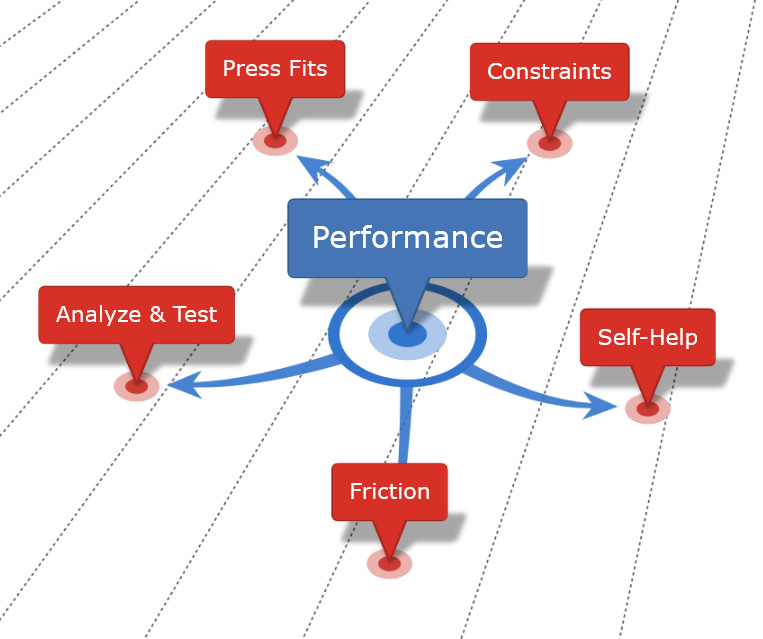
In mechanical engineering, robust design principles are foundational to creating systems that are efficient, reliable, and durable. Similarly, in software engineering, careful planning, efficient resource usage, and optimized workflows lead to high-performing applications. Applying principles from mechanical design can help software engineers structure codebases and architectures to perform at their best. In this article, we’ll explore how key concepts from The Elements of Mechanical Design by James G. Skakoon can enhance software performance.
Performance Optimization: Planning and Execution
Element 4: Plan the Load Path in Parts, Structures, and Assemblies
In mechanical design, planning the load path ensures forces are distributed to avoid stress and maximize efficiency. For software, this concept translates to planning data flow and task execution pathways to avoid bottlenecks, ensuring workloads are efficiently handled by optimized components.
Design data pipelines so that the heaviest workloads are directed to the most efficient parts of the system, reducing delays and preventing bottlenecks.
In distributed systems, tasks can be routed to the least busy node instead of overwhelming one server. This is like how load is distributed across a mechanical structure's strong parts, ensuring stability and reliability.
To keep systems efficient, regularly assess and adjust your data flow to avoid overloading any single component.
Element 7: Improve Designs with Self-Help
Mechanical systems use self-balancing to distribute loads efficiently. In software, this principle can be applied by implementing load-balancing and auto-scaling strategies that distribute resources based on real-time demand. Implement load-balancing algorithms and auto-scaling features to handle varying levels of workload dynamically.
A cloud-based system that dynamically adjusts its server count based on user traffic is akin to a self-balancing system redistributing forces as demand changes. Design your infrastructure to automatically scale up during traffic peaks and down during lows to optimize both performance and cost.
Efficient Algorithms: Minimizing Computational Overhead
Element 8: Manage Friction In Mechanisms
In mechanical engineering, managing friction avoids energy loss; similarly, in software, eliminating inefficient code reduces performance degradation. Choose algorithms that handle data efficiently with minimal computational overhead. Optimize algorithms by reducing time complexity and avoiding heavy, unnecessary calculations.
Switching from a brute-force search (O(n²)) to a binary search (O(log n)) significantly improves performance for large datasets, similar to how reducing friction in a mechanism increases efficiency. For common operations like sorting and searching, use algorithms with the lowest feasible complexity as a starting point for optimization.
Minimize High-Complexity Operations in Core Components
Mechanical designs prefer rolling or no friction; software engineers should likewise avoid high-complexity algorithms in critical pathways. Use algorithms that minimize time complexity, especially in high-frequency operations.
For sorting large datasets, choose quicksort (O(n log n)) over bubble sort (O(n²)). Similarly, in a sorted array, binary search (O(log n)) is more efficient than a linear search. Identify your application’s "hot paths" and apply the most efficient algorithms there.
Resource Management: Balancing and Efficient Allocation
Element 12: Separate Strength from Stiffness
In mechanical design, separating strength from stiffness optimizes material use. Similarly, in software, managing CPU, memory, and I/O resources separately can enhance efficiency.
Design systems that allocate resources based on specific needs: for example, memory efficiency can be improved with streamlined data structures, while CPU efficiency can benefits from concurrent processing.
Use memory-efficient data structures like hashmaps to reduce memory overhead and improve CPU efficiency through multithreading. Regularly monitor resource usage to identify which parts of the system need optimization in CPU, memory, or I/O.
Element 16: Avoid Press Fits
In mechanical design, forcing components to fit can cause stress. Similarly, in software, pushing incompatible components together often leads to inefficiencies. Avoid integrating incompatible software modules or using components outside their intended purpose, as it can slow down the system, increase complexity, and degrade maintainability.
For highly unstructured data, use a NoSQL database rather than forcing a relational database to handle it. Select tools and components that align well with their intended data structures and use cases to maintain system efficiency.
Optimize Independently: Modular and Isolated Enhancements
Element 3: Use Exact Constraint When Designing Structures and Mechanisms—Never Overconstrain a Design
Overconstraint in mechanical systems leads to stress; in software, complex, overloaded modules reduce performance. Design software components with single, well-defined purposes. This avoids unnecessary complexity and allows for more focused optimization.
Apply the Single Responsibility Principle by creating small, focused classes. This minimizes interdependencies, making each component easier to maintain and optimize. Keep components modular so that each can be optimized independently without impacting others.
Performance Profiling: Analyzing and Identifying Bottlenecks
Element 14: Analyze and Test for Trends and Relationships
Mechanical engineers analyze how forces affect system performance. In software, profiling helps identify interactions and bottlenecks that degrade performance. Use profiling tools to monitor performance, analyze resource-heavy components, and optimize based on the insights gathered.
Tools like New Relic or Datadog can pinpoint which functions or database queries consume the most resources, allowing for targeted optimizations. Regularly profile your application to stay aware of performance trends and catch potential issues early.
Element 15: Identify Contingency Plans to Minimize Risks in Design
Mechanical systems are designed with contingencies for unexpected stress. Software should be equally prepared for traffic surges, unexpected usage patterns, or resource constraints.
Implement autoscaling, circuit breakers, and fallback mechanisms to handle unexpected load or failures. In a cloud application, autoscaling responds to traffic spikes by adding servers, while circuit breakers prevent failures from cascading throughout the system. Use load testing and other fitness functions to validate contingency plans, ensuring the system can handle peak loads without failing.
Achieving High Performance Through Design Principles
By applying principles from mechanical design, software engineers can build applications that are resilient, efficient, and scalable. Planning load paths, managing computational friction, and using profiling to catch bottlenecks are just a few ways these time-tested concepts can enhance performance in software systems.
Consider exploring more advanced applications of these principles, such as load balancing algorithms, cloud autoscaling techniques, or resource-optimized data structures. Building on these foundational strategies can turn your software into a highly optimized, dependable system.
Looking for more in-depth explorations of these principles? Our premium subscribers gain access to advanced content exclusive to paid subscribers tailored for the real-world. Explore our paid tier to dive deeper into building optimized, high-performance software.