
Improve Software Reliability with Mechanical Design Principles
Discover how to apply mechanical design principles to improve software reliability, error handling, and system resilience

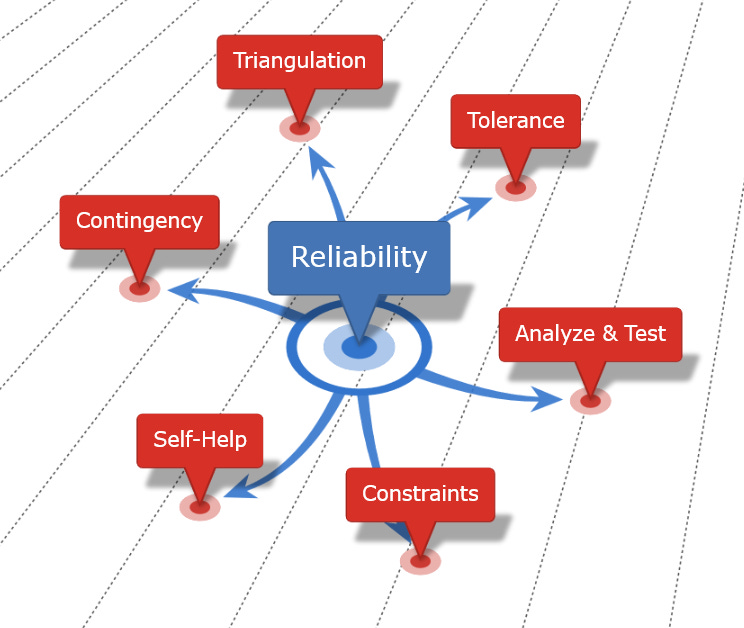
Reliability is a core attribute of both mechanical and software systems. In mechanical design, it means designing structures that perform consistently under stress. In software engineering, reliability focuses on building systems that can handle errors, maintain uptime, and recover quickly from failures. This article explores how principles from The Elements of Mechanical Design by James G. Skakoon can be applied to software engineering to improve software reliability.
Drawing on mechanical design concepts such as exact constraint, redundancy, and self-help, we will demonstrate how these approaches can inform strategies for better error handling, increased system resilience, and effective disaster recovery in software.
Understanding Software Reliability
Software reliability refers to the ability of a system to function correctly over time, focusing on aspects like error handling, fault tolerance, and uptime. Reliable software minimizes failures, which is crucial for mission-critical applications and high-availability systems.
In modern software, reliability is not just a desirable feature—it’s essential. Systems that can gracefully fail and recover quickly from disruptions deliver more value and build trust with our customers. Whether in cloud services, embedded systems, or large-scale architectures, reliable software is an advantage.
Both mechanical and software systems must perform consistently despite stresses. While mechanical systems face physical forces, software systems must handle factors like traffic spikes, network disruptions, and component failures.
Element 13: Never Overlook Buckling Phenomena in Parts and Structures
Mechanical design accounts for failure modes, such as buckling, to prevent catastrophic structural damage. Buckling occurs when compressive forces cause sudden instability.
In software, anticipating "failure modes" means preparing for scenarios that could disrupt system operations. Robust error handling ensures that when something goes wrong, the system continues operating or fails gracefully. Techniques include:
Graceful Degradation: Maintain core functionality even if non-critical features fail.
Exception Handling Patterns: Use retries, fallbacks, or circuit breakers to manage transient faults.
Logging and Monitoring: Continuously track anomalies to detect and resolve issues early.
In a microservices architecture, for example, implementing circuit breakers isolates failing services without affecting the entire system. This approach mirrors how mechanical components are isolated to prevent cascading failures.
Element 5: Triangulate Parts and Structures to Make Them Stiffer
Triangulation in mechanical design distributes forces across multiple paths, providing redundancy and stability. If one part fails, the load is shared by other components.
Redundancy in software involves replicating critical components or services to ensure availability despite failures. Common strategies include:
Multi-Region Cloud Deployments: Replicate data and services across regions to withstand outages.
Active-Passive Configurations: Switch to backup instances when the primary system fails.
Data Replication: Store data copies across nodes to protect against data loss or corruption.
For example, a cloud-based storage service replicating data across geographic regions ensures accessibility even during a data center outage.
Element 3: Use Exact Constraint When Designing Structures and Mechanisms
In mechanical design, exact constraint involves using the minimum number of constraints to prevent unwanted movement while avoiding stress due to over-restriction.
Defensive programming techniques apply similar principles by enforcing boundaries and constraints to ensure stability. Methods include:
Input Validation: Check inputs to avoid unexpected behavior.
Type Safety and Guard Clauses: Confirm data conforms to expected types and values.
Design by Contract: Define preconditions, postconditions, and invariants for code execution.
Sanitizing input data and ensuring it meets the expected format helps prevent injection attacks and unexpected software failures.
Element 7: Improve Designs with Self-Help
Self-help mechanisms in mechanical systems redistribute forces to adapt dynamically, increasing resilience.
Software systems can implement self-healing techniques to adapt to failures automatically. Examples include:
Auto-Scaling: Dynamically adjust the number of instances based on demand.
Self-Healing Clusters: Automatically restart failed services or containers.
Blue-Green Deployments: Switch between identical environments to minimize downtime during updates.
Liveness and readiness probes can detect unresponsive services, allowing the system to restart them automatically.
Element 19: Minimize and Localize the Tolerance Path in Parts and Assemblies
In mechanical design, controlling the tolerance path—allowable deviations from the design—ensures variations do not accumulate and lead to failure.
In software, managing "tolerance" involves handling variability in inputs, network latency, and other external factors. Techniques include:
Rate Limiting: Control service load to prevent system overload.
Retry Logic with Backoff: Gracefully handle transient errors without overwhelming the system.
Input Normalization: Ensure inputs stay within acceptable bounds to avoid erratic behavior.
Using exponential backoff for retries when a service is unavailable helps prevent overwhelming the system, giving it time to recover.
Element 15: Identify Contingency Plans to Minimize Risks
Mechanical designers anticipate risks and prepare contingency plans to minimize failure impact.
Contingency planning in software includes disaster recovery, failover mechanisms, and regular backups. Key practices involve:
Data Backups: Regularly backup databases and critical files.
Failover Strategies: Automatically switch to backup services during outages.
Incident Response Playbooks: Define procedures for dealing with major system incidents.
A database system using replication and scheduled backups can quickly restore data after corruption or deletion, minimizing downtime.
Conclusion
Applying mechanical design principles to software engineering encourages a disciplined approach to building reliable systems. By incorporating redundancy, anticipating failure modes, and adopting self-healing techniques, software engineers can enhance their systems’ resilience.
Audit your system's reliability strategies, including error handling, redundancy, and disaster recovery plans. Subscribe to CodeCraft Dispatch for exclusive guides, tools, and in-depth discussions on software reliability and other design principles.
What reliability challenges have you encountered in your software projects, and how did you address them? Share your experiences and insights below to help fellow engineers improve their systems.